Latest News
The Impact of Burning Fossil Fuels on Agriculture
How floods and climate disasters destroy our food—and how solar energy offers us hope.
Introduction: A World in Crisis
Clean Energy Project
For centuries, agriculture has been the backbone of human survival, providing food, jobs, and income. Yet today, it faces one of its greatest threats—not pests, not soil erosion, but the relentless impact of burning fossil fuels. The greenhouse gases released from coal, oil, and gas are heating our planet, disrupting rainfall patterns, and unleashing floods and droughts that wash away crops and devastate communities.
Imagine planting your yam, rice, or cassava only to see them wiped out by floods. Imagine the sweat of farmers lost in a single night of torrential downpour. This is not a distant problem—it is happening right now in villages, towns, and cities across Nigeria, Africa, and the world. The choices we make today will determine whether future generations inherit fertile fields or flooded wastelands.
How Fossil Fuels Trigger Climate Disasters

Fossil fuels are the largest contributor to greenhouse gas emissions. When burned, they release carbon dioxide (CO₂) and methane, which trap heat in the atmosphere. This “blanket” warms the Earth and disrupts natural climate systems. As a result:
- Rainfall patterns change—sometimes too much rain, sometimes none at all.
- Floods wash away seeds, soil nutrients, and entire harvests.
- Heatwaves scorch plants, reducing yields of crops like maize and rice.
- Strong winds and storms uproot farms, homes, and livelihoods.
These events are no longer “acts of God.” They are acts of pollution. Each truckload of coal, each barrel of oil, each liter of petrol adds to the invisible heat blanket strangling our planet.
The Human Cost: Farmers on the Frontline

Farmers are among the first and worst affected by climate change. Unlike big industries, they cannot simply pass costs to consumers or relocate production lines. Their lives are tied to the soil and the sky. When floods come, they lose not only crops but also hope.
In many regions, families that once produced surplus food are now struggling to feed themselves. Rural youth, once proud of farming, abandon the fields to chase city jobs because farming feels like a gamble against the climate. This shift weakens our food systems and increases poverty.
Why Clean Energy is the Solution
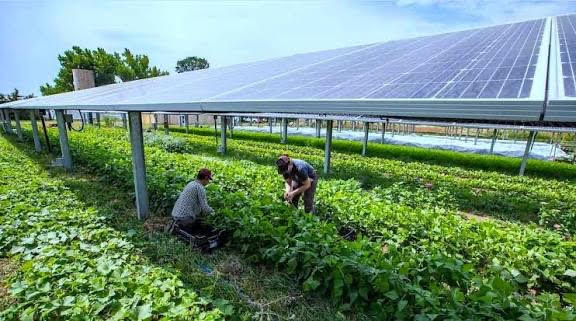
If burning fossil fuels is the problem, clean energy is the solution. Solar, wind, and hydropower offer a way to power our homes, schools, and farms without poisoning the air or destabilizing the climate. Unlike oil and gas, the sun does not send us a bill—it sends us light every morning, free of charge.
By embracing solar energy, we reduce the demand for fossil fuels. Each rooftop solar panel, each community microgrid, and each solar-powered irrigation pump is a shield against climate chaos. More than technology, clean energy is hope in physical form.
Floods and Food Security: A Personal Story

In 2022, a devastating flood swept through parts of Nigeria, submerging farmlands, destroying homes, and leaving millions displaced. I remember standing in ankle-deep water, staring at fields of yam that had vanished overnight. Farmers cried, not just for the loss of crops, but for the loss of their children’s future.
That day I understood: this is not just about farming—it is about survival. If we do not cut our dependence on fossil fuels, floods like this will become the new normal. But with clean energy, we can slow down this cycle, protect our farms, and build resilience for our communities.
Steps We Must Take Together
Transitioning from fossil fuels to solar and clean energy is not optional—it is urgent. Every government, business, school, and household has a role to play. Here’s how we can act:
- Farmers: Adopt solar irrigation pumps and solar dryers to preserve crops.
- Communities: Build solar mini-grids to power villages without diesel generators.
- Governments: Invest in renewable energy policies and climate-smart agriculture.
- You: Choose clean energy where possible, support green businesses, and advocate for change.
Go Solar. Save Farms. Save Lives.
Agriculture is the heart of our survival. But fossil fuels are choking that heart with floods, droughts, and disasters. Together, we can break this cycle. By choosing solar, we choose food security, healthier air, and a brighter future.
To join The Earth Needs Us Now Movement (TENUN), kindly Click here